 Fox & Fern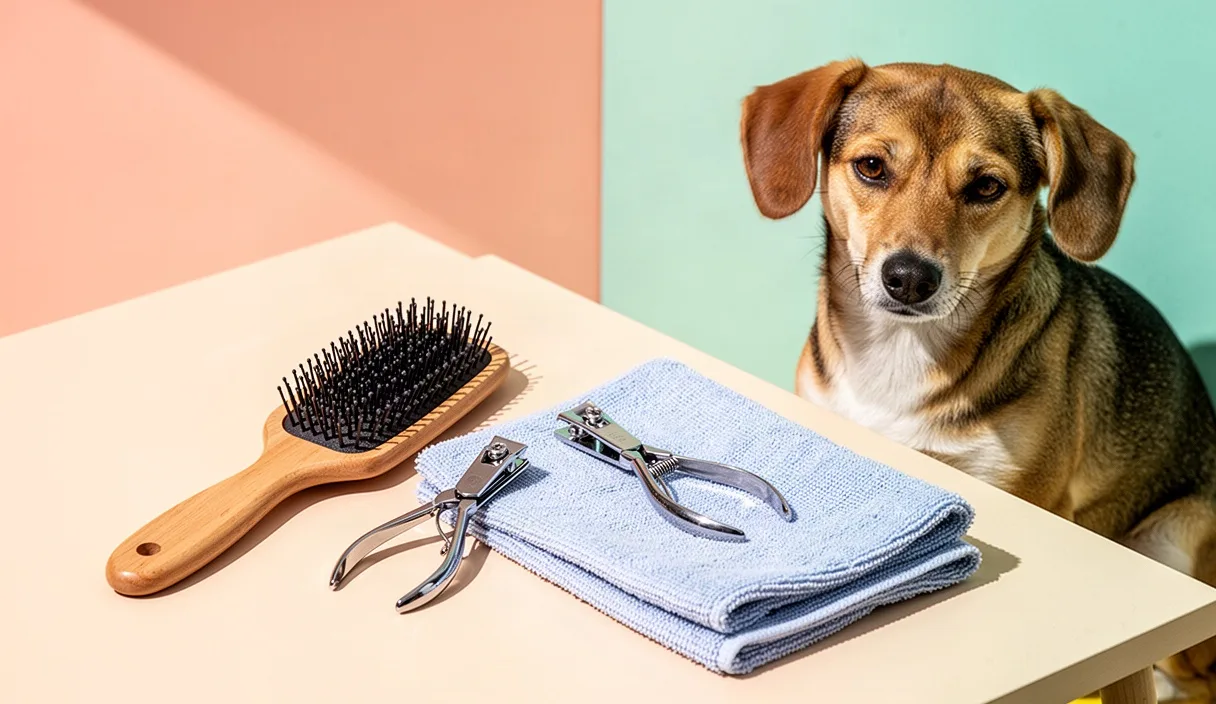
Short hair looks low-maintenance. It is not the same as no-maintenance.
A weekly rhythm keeps small things small. This checklist breaks the week into simple tasks. Each one takes a few minutes. Together they prevent bigger problems.
Why Short Coats Still Need Grooming
Short hair sheds. It just sheds in smaller pieces.
Those pieces collect on furniture, in car seats, on clothing. Regular brushing controls where the hair ends up.
Short coats also hide skin problems. A flea, a hot spot, a patch of dry skin can go unnoticed under fur that looks fine from a distance.
Grooming is not about appearance alone. It is a weekly chance to notice change early.
Brushing Frequency And Tools
Most short-haired dogs need brushing two to three times a week. Heavy shedders, like Labradors or Beagles, benefit from daily brushing during spring and fall.
The right tool depends on coat type, not brand loyalty.
- Rubber curry brush: good for smooth, single coats like Boxers or Greyhounds.
- Bristle brush: works on wiry or slightly coarse short coats.
- Grooming glove: useful for dogs who resist traditional brushes.
- Shedding blade: effective during seasonal shedding, used sparingly.
Brush in the direction the hair grows. Short, calm strokes work better than long, forceful ones.
Five minutes is usually enough. Longer sessions rarely add benefit and may irritate the skin.
Nail Trimming Basics
Nails grow whether or not the coat is short. This step gets skipped most often.
A dog's nails need trimming every three to four weeks for most breeds. Dogs who walk daily on pavement may need it less often.
Signs the nails are too long:
- Clicking on hard floors.
- Nails touching the ground when the dog stands still.
- Visible curving at the tip.
Trim a small amount at a time. Stop before reaching the quick, the pink area inside the nail.
If the nail bleeds, apply a styptic powder or cornstarch. If bleeding does not stop within a few minutes, contact a veterinarian.
Dogs with dark nails hide the quick well. A groomer or vet can trim these safely if you are unsure.
Ear And Eye Checks
Ears and eyes need a look, not a full cleaning, most weeks.
For ears, check weekly for:
- Redness inside the ear flap.
- A strong odor.
- Dark wax buildup.
- Scratching or head shaking.
Dogs with floppy ears, like Cocker Spaniels, need more frequent checks than dogs with upright ears.
For eyes, wipe away any crust with a damp, soft cloth. Do this gently, once a week, more often if discharge appears daily.
Persistent redness, swelling, or discharge is a reason to see a veterinarian. This checklist does not replace medical advice.
Bathing: How Often Is Enough
Short-haired dogs do not need frequent baths. Once every four to six weeks is enough for most dogs without skin conditions.
Bathing too often strips natural oils. This can lead to dry, flaky skin, especially in winter.
| Coat Type | Typical Bath Frequency |
|---|---|
| Smooth, low-oil coat (Whippet, Boxer) | Every 6 to 8 weeks |
| Active, outdoor dogs (Labrador, Beagle) | Every 4 weeks |
| Dogs with skin sensitivities | As advised by a veterinarian |
Use a mild, dog-specific shampoo. Human shampoo can disrupt the skin's natural pH.
Rinse thoroughly. Leftover soap residue causes itching more often than the dirt it was meant to remove.
A Printable Weekly Checklist
A simple list, done consistently, works better than an elaborate one done rarely.
- Brush coat, two to three times this week.
- Check nails, trim if clicking on floors.
- Look inside both ears for redness or odor.
- Wipe eyes if discharge is present.
- Check paws and pads for cracks or debris.
- Run hands over the body, feel for lumps or bumps.
- Note any change in coat texture or shedding pattern.
Keep this list somewhere visible. A kitchen calendar or a phone reminder works fine.
Consistency matters more than precision. Missing one day does not undo the week.
Signs To Watch For Between Sessions
Some signs need attention before the next scheduled check.
- Excessive scratching in one spot.
- A sudden bald patch.
- Limping after a nail trim.
- Ear odor that returns within days of cleaning.
- Dry, flaking skin that spreads.
These are not always serious. But they are worth mentioning to a veterinarian, especially if they last more than a few days.
Early notice is the main advantage of a weekly routine. It turns big surprises into small questions.
Common Mistakes
Skipping nail trims until they are overdue. This makes the quick grow longer, which makes future trims harder.
Bathing too frequently out of habit rather than need. This dries the skin over time.
Using human tools, like nail clippers or shampoo, instead of ones made for dogs.
Rushing ear checks. A quick glance can miss early redness.
Treating grooming as a monthly event instead of a weekly one. Small checks catch small changes.
Next Steps
Start with one task this week. Brushing is the easiest place to begin.
Add nail checks the following week. Build the routine slowly, rather than all at once.
If any sign feels unusual, a veterinarian or professional groomer can give guidance specific to your dog. This checklist is a starting point, not a diagnosis.
Over a few weeks, the routine becomes ordinary. That is the goal, not a special occasion, just a normal Tuesday.