 Fox & Fern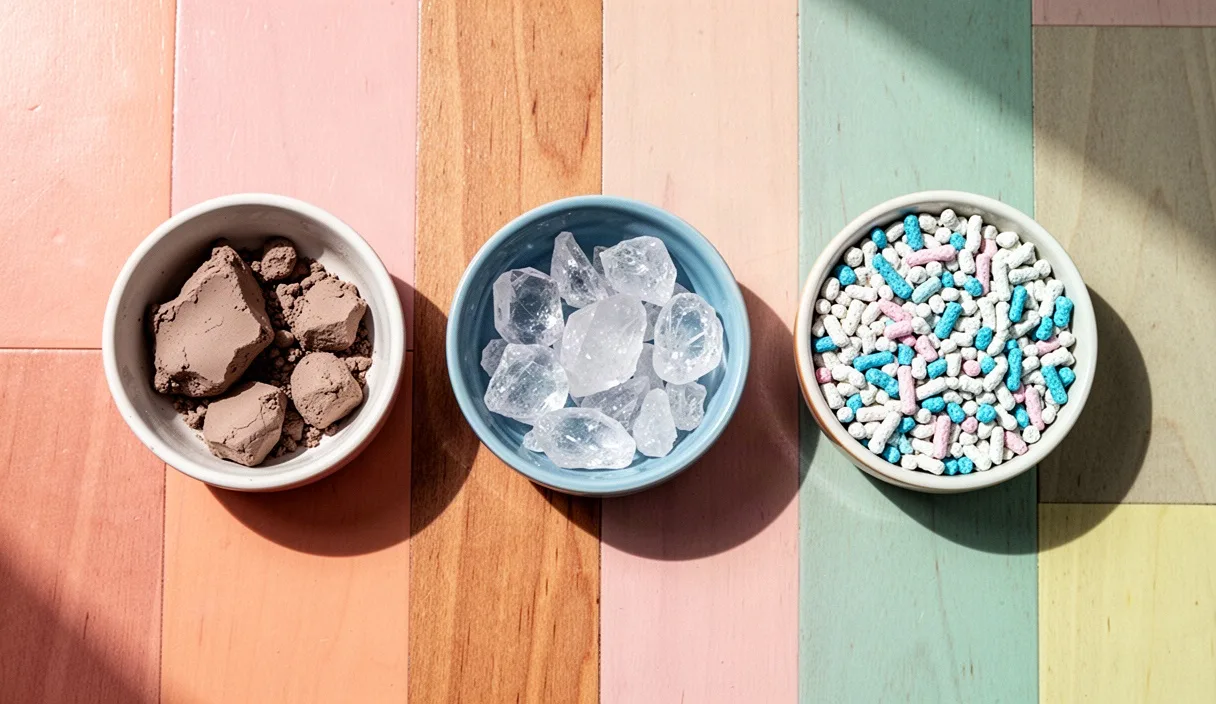
A litter box works when the litter does three things: it controls odor, it clumps or absorbs waste cleanly, and it stays where the cat is willing to step. Everything else is preference.
Clay, crystal, and paper are the three materials most households choose between. Each one solves the basic problem differently, and each one asks something different of the person scooping the box.
What Litter Actually Needs To Do
Litter absorbs urine, traps odor, and lets solid waste be removed without disturbing the rest of the box. That is the whole job.
A cat also has to accept the texture underfoot. Some cats dig deep, some barely scratch the surface, and a litter that feels wrong can send a cat looking for a rug or a corner instead.
Tracking matters too. Litter that clings to paws and travels through the house adds cleanup time that has nothing to do with the box itself.
- Odor control: how fast ammonia smell builds and how well the litter contains it.
- Clump strength: whether waste can be lifted out whole, or crumbles and spreads.
- Tracking: how far granules travel on paws after a visit.
- Dust: how much fine particulate rises when litter is poured or scooped.
Clumping Clay Litter
Clumping clay is made from bentonite, a clay that swells when it meets liquid and forms a solid mass around urine. That clump can be scooped out in one piece, leaving the rest of the box dry.
A standard 40-pound box, refreshed with daily scooping, typically lasts three to four weeks for one cat before a full change. Clay is heavy, so a 40-pound bag is often the largest size a person can carry comfortably in one trip.
Odor control is strong for the first several days, then it fades as the unscooped areas absorb ammonia. Daily scooping is what keeps clay performing, not the litter alone.
Clay dust is the main complaint. Pouring a fresh bag into an empty box can send a visible cloud into the air, and low-dust clay formulas exist specifically to reduce that.
Where clay tends to land
- Households with one or two cats and a daily scooping routine.
- Multi-cat homes that need a litter proven to clump reliably under heavy use.
- Anyone who wants a litter available at nearly every grocery store, not just pet retailers.
Crystal Litter
Crystal litter is made from silica gel, the same material found in small moisture-absorbing packets. Instead of clumping, it absorbs liquid into its structure and holds odor at the molecular level.
Because it does not clump, solid waste is scooped out but urine is left to be absorbed until the crystals are saturated. A typical bag lasts around four weeks for one cat with regular solid scooping, though this depends on the cat's size and how much it drinks.
Crystals change color as they absorb, going from clear or blue to a duller tone that signals it is time for a full change. That visual cue is one of the few from any litter type.
Cost per bag is higher than clay, and bags are smaller by weight because crystals are far lighter. A cat that dislikes the texture, some find it sharp or too different from soil, may avoid the box entirely, so a slow introduction next to the old litter is worth trying first.
Paper Litter
Paper litter is made from recycled paper, pressed into pellets or crumbled into a soft, low-dust material. It absorbs liquid rather than clumping, similar to crystal litter in that respect.
It is the softest material underfoot of the three, which makes it a common recommendation after declawing surgery or paw injuries, though a veterinarian should confirm what is appropriate for a specific cat's recovery.
Odor control is the weakest of the three types on its own. Paper litter typically needs full changes every four to five days rather than weeks, which raises the frequency of full box cleaning.
Paper does not track the way clay or crystal does, since pellets are larger and heavier per piece. It is also the easiest of the three to flush in small amounts or compost, though local sewage guidelines vary and should be checked before flushing any cat waste.
Dust And Air Quality
Dust is not just a cleaning nuisance. Fine particulate from litter can settle on furniture, get inhaled by both the cat and the people nearby, and aggravate existing respiratory sensitivity in either.
Clay produces the most dust of the three, especially non-clumping and low-cost formulas. Crystal produces very little, since silica granules are larger and less prone to breaking down into powder. Paper produces the least, often marketed specifically as a dust-free option.
A simple test at home: pour a scoop of litter from shoulder height onto a dark surface and watch what rises. If a visible haze hangs in the air for several seconds, that is the dust a cat's face is exposed to every time it digs.
A person with asthma or a cat with a known respiratory condition should ask a veterinarian which litter type is least likely to cause irritation before switching.
Cost Over A Year
Price per bag is misleading on its own, since bag size, lifespan, and how often the full box is changed all factor into real annual cost.
| Litter Type | Typical Bag Cost | Full Change Frequency | Rough Annual Cost (1 cat) |
|---|---|---|---|
| Clumping Clay | $12-16 per 40 lb | Every 3-4 weeks | $150-200 |
| Crystal | $18-24 per 8 lb | Every 4 weeks | $230-280 |
| Paper | $14-18 per 15 lb | Every 4-5 days | $300-360 |
These figures assume one cat and daily solid scooping. Multi-cat households should expect these numbers to roughly double or triple per additional cat, since waste volume and full-change frequency both rise.
Choosing By Household
A single-cat home with a tight budget and no dust sensitivity usually does well with clumping clay, scooped daily and fully changed monthly.
A home with a cat that has a respiratory issue, or a person nearby who does, benefits more from crystal or paper despite the higher cost, since both produce far less airborne particulate.
A multi-cat household needs to weigh clumping strength against cost. Clay handles high volume most reliably, but the box may need scooping twice a day rather than once when three or more cats share it.
A kitten under four months old should not be given crystal litter without checking with a veterinarian first, since some kittens chew or ingest litter while learning box habits, and silica is not meant to be swallowed.
Common Mistakes
- Switching litter types abruptly instead of mixing new with old over one to two weeks, which can cause a cat to avoid the box.
- Assuming a "13-day" odor claim on packaging matches real use with a scooping schedule that differs from the test conditions.
- Filling the box too deep. Two to three inches is enough for most litters; more depth adds cost without improving odor control.
- Ignoring a sudden litter box avoidance as a preference issue when it can also signal a urinary tract problem that needs a veterinarian's attention.
Next Steps
Start with the litter type that matches the most pressing need in the household: budget, dust sensitivity, or ease of clumping in a multi-cat box.
Buy the smallest available bag of a new type before committing to a large one, and place a second box with the new litter next to the current setup rather than replacing it outright.
Watch the cat's behavior over the first week: digging, covering, and time spent in the box all signal comfort. A cat that avoids a new litter for more than a few days is signaling a real preference, not just adjusting.
If avoidance continues alongside straining, frequent trips, or blood in the urine, a veterinarian should be consulted before assuming the litter is the cause.