 Fox & Fern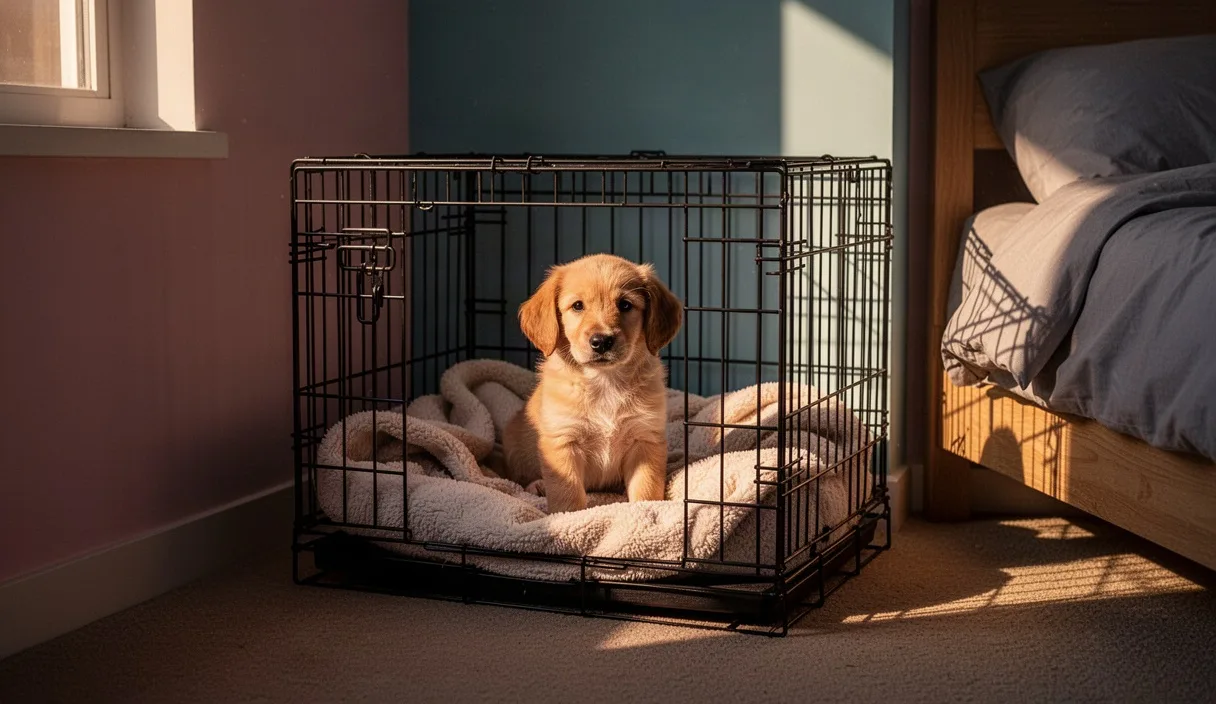
A new puppy arrives with no memory of this house. The smells are new. The sounds are new. The dark is new.
The first night sets a tone. It does not need to be perfect. It needs to be calm, predictable, and safe.
Preparing The Space
Pick one room for the first night. A kitchen, laundry room, or bedroom works. Avoid large open spaces at first.
Remove loose cords. Remove small objects a puppy could chew or swallow. Check for gaps under cabinets or behind appliances.
Put down a washable mat or puppy pads near the sleeping area. Puppies under sixteen weeks often cannot hold their bladder through the night.
Keep the room temperature steady, between 65 and 72 degrees Fahrenheit. A cold floor at night can make a puppy restless.
- Water bowl within reach, but not right next to the bed
- One or two chew-safe toys, nothing squeaky at bedtime
- A blanket or towel with the breeder's or shelter's scent, if available
- A nightlight or dim lamp nearby, not directly overhead
Choosing A Crate Or Pen
A crate gives a puppy a defined space. It is not a punishment. It is a den.
Size matters. The crate should fit a bed, allow the puppy to stand, turn, and lie flat. Too much extra room can encourage using one corner as a bathroom.
A pen offers more space and is useful for very young puppies, eight weeks and under, who need room to move and eliminate separately from where they sleep.
| Option | Best For | Watch For |
|---|---|---|
| Wire crate | Puppies who settle with visibility around them | Cover with a light cloth if too open feels exposing |
| Plastic crate | Puppies who prefer a den-like, enclosed feel | Less airflow in warm rooms |
| Puppy pen | Very young puppies, or dogs unsure about crates | More space means less containment for potty training |
Line the crate with a firm, washable bed. Skip anything stuffed or fluffy on night one. Some puppies chew bedding when anxious.
Managing Sound And Light
Total darkness and total silence are not calming for a puppy. A small amount of ambient light and sound often helps more.
A dim nightlight lets the puppy see the edges of the crate or pen. Sudden darkness can trigger whining.
White noise, or a fan on low, covers house creaks and outside traffic. This is not about masking the puppy's own sounds. It is about smoothing sudden noises that might startle a sleeping puppy awake.
Avoid a television or radio with talking or music. Speech patterns and sudden volume changes can unsettle a puppy more than they soothe.
The First Bedtime Routine
Puppies settle faster with a routine, even on the first night.
- Give the last meal three to four hours before bedtime.
- Take the puppy outside for a bathroom break fifteen minutes before lights out.
- Bring the puppy into the sleeping area and let them sniff around for a few minutes.
- Place them in the crate or pen with one chew toy.
- Turn off bright lights, turn on the nightlight and white noise.
- Sit nearby for five to ten minutes, then step away quietly.
Keep your voice low and slow during this routine. Avoid excited tones. The goal is to signal that nighttime is uneventful.
Some owners keep the crate in the bedroom for the first few nights. This can reduce whining, since the puppy is not alone. Others prefer a separate room from the start. Either can work. Consistency matters more than the specific choice.
What To Expect During The Night
Whining in the first thirty minutes is common. It does not always mean distress.
A puppy between eight and twelve weeks old may need a bathroom break once or twice overnight. Watch for pacing, circling, or sudden alertness. These often mean it is time to go outside.
Keep nighttime bathroom trips brief and quiet. No play, no long talking. Outside, wait, then straight back to the crate.
| Age | Typical Overnight Bathroom Needs |
|---|---|
| 8 to 10 weeks | One to two breaks |
| 11 to 14 weeks | One break, sometimes none |
| 15 weeks and older | Often none, depending on the individual dog |
Crying that continues past twenty or thirty minutes, especially with no pacing or bathroom signs, may mean the puppy is anxious rather than needing to go outside. A brief, calm check-in can help. Avoid taking the puppy out of the crate to play, since this can teach them that crying leads to attention.
If a puppy seems in pain, is vomiting, or will not settle at all after repeated nights, a veterinarian visit is worth considering. Persistent distress is not something to guess about at home.
Common Mistakes To Avoid
Letting a puppy sleep in the bed on night one, then moving them later, often causes confusion. Decide the long-term sleeping arrangement before the first night, if possible.
Responding to every small whimper with picking up and cuddling can reinforce crying as the way to get attention. A quiet voice and stillness are usually enough.
Skipping the last bathroom break before bed is a common oversight. A tired owner forgets, and the puppy pays for it with an accident an hour later.
Placing the crate right next to a heating vent or drafty window, without checking the temperature at floor level, can leave a puppy too warm or too cold overnight.
A Simple First-Night Checklist
Before turning off the lights, run through this short list.
- Water bowl filled and placed nearby
- Bathroom break completed within the last twenty minutes
- Crate or pen lined with a firm, washable bed
- One safe chew toy inside the crate
- Nightlight and white noise turned on
- Room temperature checked at floor level
- Loose cords and small objects removed from the room
- A plan in place for who handles nighttime bathroom breaks
The first night rarely goes perfectly, and it does not need to. A calm, prepared space matters more than a quiet night. If unusual symptoms appear, such as ongoing vomiting, extreme lethargy, or refusal to eat, contact a veterinarian rather than waiting to see if it passes.