 Fox & Fern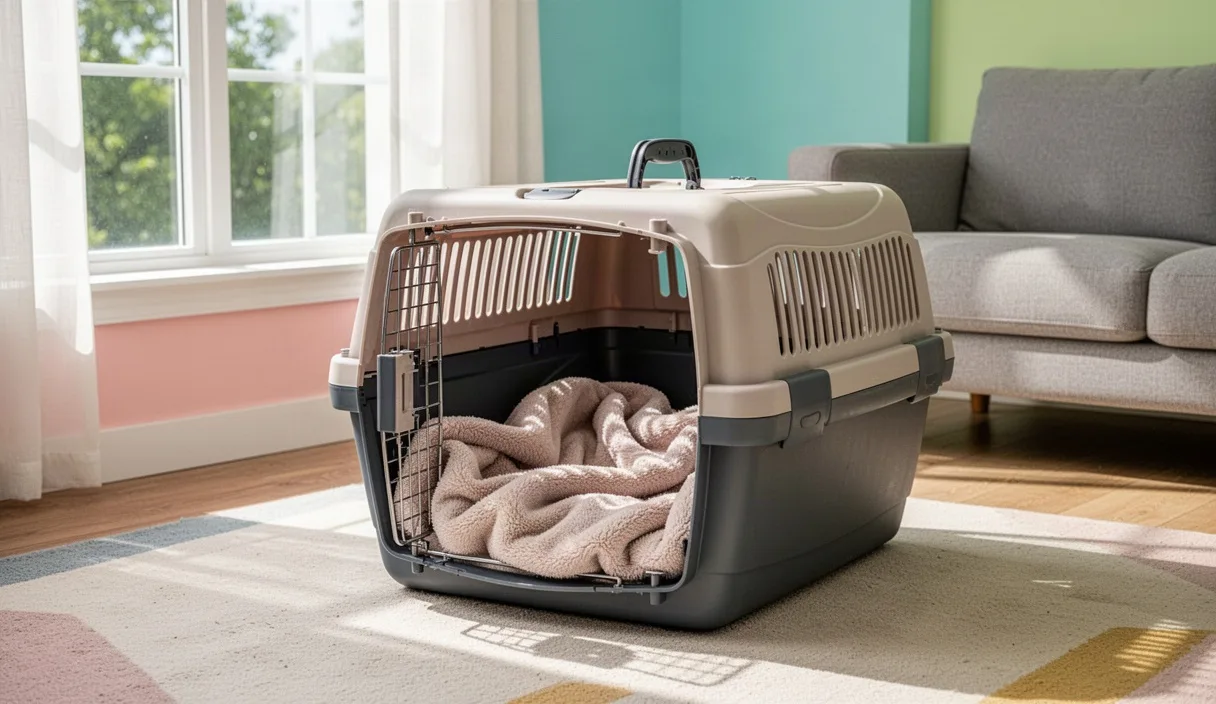
A cat carrier means one thing to most cats: something is about to change. The vet, a car, a strange smell. None of that feels good without preparation.
Carrier training turns that box into something neutral, then something familiar. It takes days or weeks, not minutes. The payoff shows up on travel day, when the cat walks in on its own instead of being pushed.
Why Carrier Training Helps
A cat that fears the carrier associates it with stress before the trip even starts. The stress begins in the living room, not at the destination.
Training breaks that link slowly. The carrier stops being a signal for "something bad" and becomes just another object in the house.
This matters for flights, car rides, and vet visits alike. A calmer start usually means a calmer middle, though no method removes all stress completely.
Vets often see the difference immediately. A cat that walks into an exam room in a familiar carrier tends to settle faster than one dragged out of a carrier it has never seen before that day.
Introducing The Carrier At Home
The carrier needs to exist in the home for weeks before travel, not just the night before.
Leave it open on the floor, in a room the cat already uses. Remove the door if possible, or prop it open securely.
Let the cat approach on its own terms. No lifting, no carrying, no coaxing with hands near the opening at first.
- Place the carrier in a quiet corner, not a hallway with heavy foot traffic.
- Keep it there permanently for at least two weeks before any short trips begin.
- Avoid moving it around the house during this period.
- Let other pets in the home approach it too, calmly, without competition.
Some cats ignore the carrier for days. That is normal. Curiosity usually comes on its own schedule, not the owner's.
Building Positive Associations
Once the carrier is part of the room, it needs to become a good place, not just a neutral one.
Food works well for this. Place a few treats near the entrance, then a few more just inside the door.
Over several days, move the treats farther back, toward the rear wall of the carrier. Some cats eat a full meal inside within a week. Others take longer.
Bedding helps too. A worn shirt or a blanket that already smells like the cat can go inside. Familiar scent lowers the sense of threat.
| Association Method | What It Does | Typical Timeline |
|---|---|---|
| Treats near entrance | Builds curiosity without pressure | 2 to 4 days |
| Treats inside carrier | Encourages entry on the cat's terms | 4 to 7 days |
| Familiar bedding inside | Reduces scent-based alarm | Ongoing, from day one |
| Feeding meals inside | Links carrier with comfort, not fear | 1 to 2 weeks |
Toys can help for some cats, though food tends to be the more reliable motivator. A catnip toy left inside overnight sometimes speeds things along.
Practicing Short Closed-Door Sessions
Once the cat enters the carrier without hesitation, the door becomes the next step.
Close it for a few seconds only, then open it again. No car, no movement, just the door.
Watch for signs of distress: fast breathing, wide eyes, scratching at the door. If any of these appear, the session was too long. Shorten it next time.
- Close the door for five seconds, then open it and offer a treat.
- Repeat this three or four times per session, once a day.
- Extend the closed time by ten or fifteen seconds every few days, based on how calm the cat stays.
- Stop increasing time if the cat shows stress signs. Go back to the last comfortable duration.
Most cats reach a full minute of calm, closed-door time within two weeks. Some take longer, and that is not a failure of the process.
Practicing Short Trips
The next stage adds motion. Carry the closed carrier from one room to another, then set it down.
Later, carry it to the car. Sit inside the car with the engine off. Then, on another day, start the engine without driving anywhere.
Short drives come after that: to the end of the street and back, then around the block. Each trip should end with the cat coming out calmly, not frantic.
| Stage | Duration | Goal |
|---|---|---|
| Carry around the house | 1 to 2 minutes | Get used to the carrier moving |
| Sit in parked car | 2 to 5 minutes | Associate car space with calm |
| Engine running, no driving | 2 to 3 minutes | Adjust to engine sound and vibration |
| Short drive around the block | 5 to 10 minutes | Combine motion with the carrier experience |
If the cat vomits, cries continuously, or tries to escape during any stage, pause the training. A veterinarian or a certified cat behaviorist can help identify whether the issue is fear, motion sickness, or something medical.
Packing The Carrier For Travel Day
By travel day, the carrier itself should already feel familiar. Packing it well keeps that familiarity intact during the actual trip.
Line the bottom with an absorbent pad, not just a towel. Accidents happen more often during real travel than during practice runs.
- One familiar blanket or piece of bedding, already carrying the cat's scent.
- A small amount of dry food in a sealed bag, in case a delay stretches longer than expected.
- A collapsible water dish, though water inside a moving carrier often spills.
- A recent photo of the cat, stored on a phone, in case of an unexpected escape at a rest stop or airport.
- Any medication the cat takes regularly, along with dosage instructions written down.
Avoid new bedding or new toys on travel day. New scents add another layer of unfamiliarity right when routine matters most.
A Pre-Trip Checklist
A short checklist the day before travel catches most common problems early.
- Confirm the carrier door latches securely and does not pop open under light pressure.
- Check airline or transportation carrier-size rules again, since they sometimes change.
- Weigh the cat if the trip involves size or weight limits for cabin travel.
- Pack food and water dishes, plus a small supply of the cat's regular food.
- Attach an ID tag to the collar, and confirm microchip information is current.
- Ask a veterinarian about any pre-travel documents required, especially for flights or international travel.
Skipping the paperwork step causes more delays than almost anything else. Airlines and some states require specific health certificates, and rules vary by destination. A veterinarian can confirm what applies to the specific trip.
Common Mistakes
- Introducing the carrier for the first time on travel day itself.
- Forcing the cat inside instead of waiting for it to enter on its own.
- Skipping the closed-door practice and going straight to a car ride.
- Using a carrier that is too small for the cat to turn around in comfortably.
- Cleaning the carrier with strong-scented products right before a trip.
Next Steps
Start with the carrier sitting open in a quiet room today, even if the trip is weeks away.
Move through the stages slowly. A cat that rushes through training under pressure often reverts to old fear once the real trip begins.
If stress signs persist despite steady practice, a veterinarian or certified feline behaviorist can offer options suited to that specific cat. Some cats benefit from calming aids, though these should only be used under professional guidance.