 Fox & Fern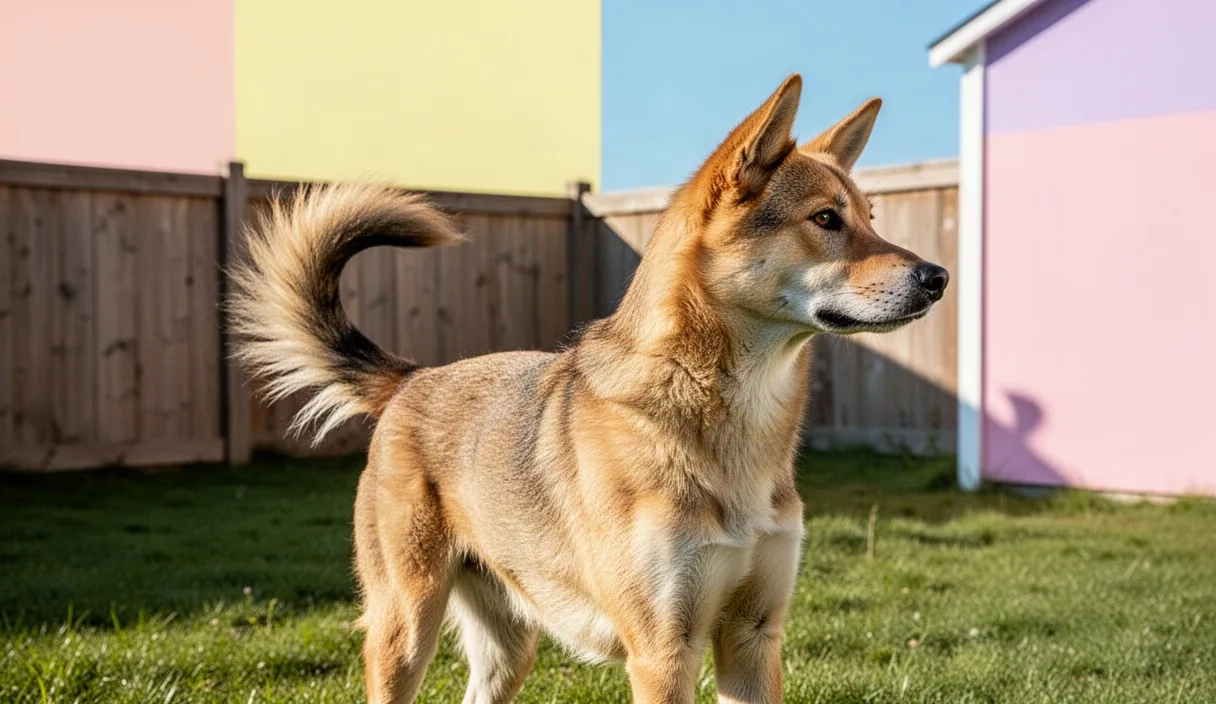
A dog's body speaks before its mouth ever does. A tail wag can mean joy. It can also mean tension. The same motion, different meaning, depending on the rest of the body.
This guide breaks down the signals dogs use most often. Tail, ears, posture, and the small moments owners tend to miss. None of this replaces a trainer or a veterinary behaviorist. It simply helps you notice more, sooner.
Why Body Language Matters
Dogs do not use words. They use muscles, distance, and timing. A shift in weight. A held breath. A closed mouth instead of an open one.
Owners who read these signals early can prevent bigger problems. A growl is a late warning, not the first one. The first warning usually comes minutes earlier, in the shoulders or the eyes.
Reading body language also builds trust. A dog that feels understood relaxes faster. A dog that feels ignored escalates, because escalation is the only language left.
- Early signals are quiet: a freeze, a lowered head, a slow blink.
- Late signals are loud: barking, snapping, lunging.
- Owners who catch the quiet signals rarely see the loud ones.
Reading The Tail
The tail is not a mood ring. It is closer to a speedometer. It tells you about arousal, not always about emotion.
A high, stiff tail with small fast movements often signals alertness or tension. A loose, wide wag at hip height usually signals ease. A tail tucked under the body signals fear or submission.
Breed shape changes the baseline. A Greyhound's resting tail sits low. A Husky's resting tail curls up. Learn your own dog's neutral position before judging any single wag.
| Tail Position | Likely Meaning | What To Do |
|---|---|---|
| Loose, wide wag, low to mid height | Relaxed, friendly | Continue normal interaction |
| High, stiff, small fast flicks | Alert, possibly tense | Pause, watch the rest of the body |
| Tucked under body | Fear or submission | Remove the pressure causing it |
| Straight out, unmoving | Focused, assessing | Give space, avoid sudden movement |
Reading The Ears
Ears move faster than most other signals. They respond to sound first, then to emotion a moment later.
Forward, perked ears usually mean interest or alertness. Ears pinned flat against the head usually mean fear or submission. Ears held slightly back and soft usually mean relaxation.
Dogs with naturally floppy ears, like Basset Hounds, show less range. Watch the base of the ear instead of the tip. The base still moves, even when the tip cannot.
Ear position rarely stands alone. Pair it with the eyes. Soft eyes and forward ears mean curiosity. Hard eyes and forward ears mean something closer to a stare, which is worth watching carefully.
Reading The Posture
Posture is the slowest signal to change, and the most reliable. A dog can fake a wag for a second. A dog cannot easily fake a lowered spine for a minute.
A relaxed dog holds its weight evenly on all four legs. A stressed dog often shifts weight backward, toward the rear legs, as if preparing to retreat.
A play bow, front legs down and rear end up, is an invitation. It is one of the clearest positive signals in the entire canine vocabulary.
A stiff, forward-leaning body with a closed mouth and hard stare is different. This is a warning posture. It often appears before a growl, not after.
- Loose and wiggly: comfortable, open to interaction.
- Frozen and still: assessing a threat, needs space.
- Leaning away: uncomfortable, wants distance.
- Leaning forward, weight over front paws: confident or confrontational, context dependent.
Common Signals Owners Misread
Some behaviors look like one thing and mean another. This is where most misunderstandings between dogs and people happen.
A yawn outside of tiredness is often stress, not boredom. A dog yawning during a vet visit is usually anxious, not sleepy.
Licking the lips, when no food is present, often signals discomfort. It shows up before a dog moves away from something it dislikes.
A wagging tail during a tense encounter with another dog is not automatically friendly. Combined with stiff legs and a hard stare, it can mean the opposite.
Quick Comparison: Looks Similar, Means Different
| Behavior | Common Assumption | Often Actually Means |
|---|---|---|
| Yawning | Tired | Stressed or anxious |
| Rolling onto back | Wants belly rub | Sometimes appeasement, not always an invitation |
| Wagging tail near other dogs | Friendly | Can mean high arousal, not friendliness |
| Sniffing the ground during a walk | Ignoring you | Can be self-soothing during stress |
Context decides the meaning. The same signal, in a different setting, can point to a different internal state entirely.
When To Give Your Dog Space
Space is a request, not a punishment. Dogs ask for it constantly, usually before they ask with teeth.
Turning the head away from a person or another dog is a request for space. So is moving slowly, or freezing mid-motion.
A closed mouth, after a period of panting, often means the dog has shifted from relaxed to alert. This shift deserves attention.
If a dog shows several of these signals at once, stiff body, pinned ears, tucked tail, hard stare, the safest response is to step back calmly. Do not reach toward the dog. Do not make direct eye contact. Let the dog choose the next move.
Children around dogs benefit from a simple rule: if the dog moves away, let it. Chasing a dog that is asking for space almost always makes things worse.
- Turning the head away: mild request for space.
- Moving away slowly: moderate request for space.
- Freezing completely: strong warning, give space immediately.
- Growling or snapping: the dog has already tried quieter signals first.
A Quick Reference Checklist
This list works well taped near a leash hook, or saved on a phone before a walk.
- Check the tail height against the dog's own resting position, not a general rule.
- Check the ears: forward and soft, or pinned and tight.
- Check the mouth: open and loose, or closed and tense.
- Check the weight distribution: even, or shifted backward.
- Check the eyes: soft and blinking, or hard and fixed.
- Combine at least two signals before drawing a conclusion.
- When signals conflict, assume caution over comfort.
No single signal tells the full story. Two or three signals, read together, usually do.
Common mistakes
Owners often read one signal in isolation, like a wag, and ignore the rest of the body.
Owners often assume their own dog's baseline matches every other dog's baseline. It does not.
Owners often approach a freezing dog instead of pausing. Freezing is a request, not an invitation.
Next Steps
Start by watching your dog during ordinary moments: mealtime, greetings, rest. Note the resting tail height, the resting ear position, the resting posture. This becomes your baseline.
Compare new situations against that baseline, rather than against a general chart. A dog's own normal is the most useful reference point available.
If your dog shows frequent stress signals, growling, snapping, or sudden avoidance, a conversation with a veterinarian or a certified dog behaviorist is worth having. Some causes are behavioral. Some are medical. A professional can help tell the difference.