 Fox & Fern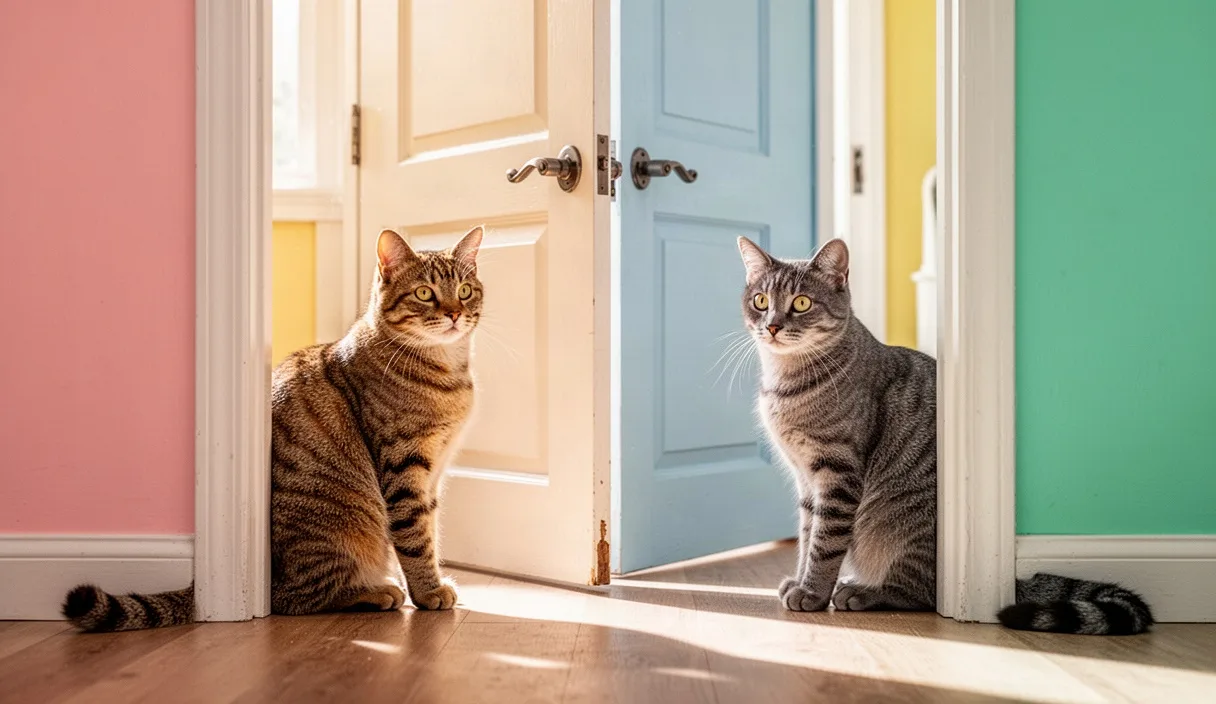
A new cat enters a home that already has a rhythm. The resident cat knows the smells, the light, the quiet corners.
Introductions take time. Weeks, not days. This guide walks through each stage, slowly, so both cats can adjust without fear.
Why Slow Introductions Matter
Cats are territorial by nature. A resident cat sees its home as a fixed space, mapped by scent.
A rushed introduction skips that mapping process. The resident cat smells a stranger everywhere at once, with no warning.
Fast introductions often lead to hissing, hiding, or fighting. These reactions are not a sign of a bad match. They are a sign of too much change, too fast.
Slow introductions lower stress for both cats. They also lower the risk of a fight that could injure either animal or set a bad first impression that lasts for months.
Setting Up Separate Spaces
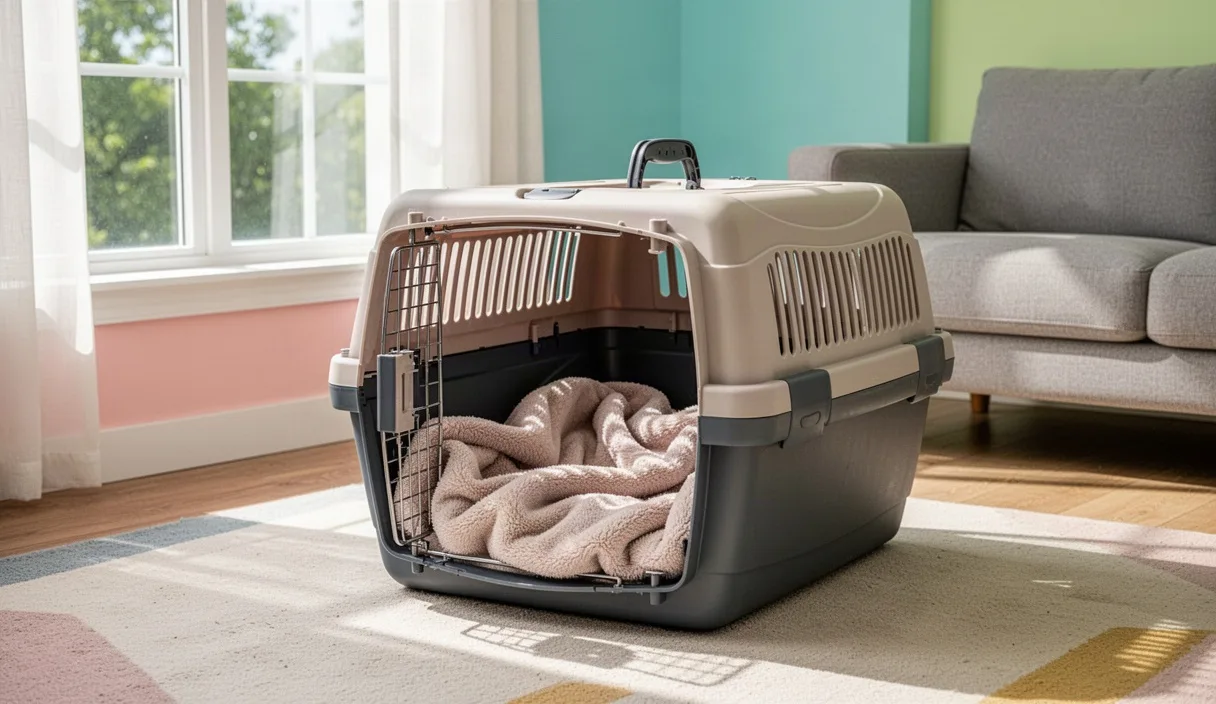
Before the new cat comes home, prepare one separate room. This room needs its own litter box, food, water, and a place to hide.
The new cat stays in this room for the first several days. This gives it time to settle without meeting the resident cat face to face.
The resident cat keeps the rest of the house. Nothing changes for it yet, except a new smell behind a closed door.
- Litter box: one per cat, plus one extra, placed in different areas.
- Food and water bowls: separate for each cat, never shared during this stage.
- Hiding spot: a box, a covered bed, or a cat carrier with the door removed.
- Vertical space: a shelf or cat tree, if the room allows it.
Keep the door closed at all times during this early stage. A baby gate is not enough. Cats can slip through the gaps.
Swapping Scents First
Cats read the world through scent before sight. Scent introductions happen before any visual contact.
Take a soft cloth and rub it gently on the new cat's cheeks. Cheeks carry scent glands that mark familiar things as safe.
Place that cloth near the resident cat's food, but not directly on it. Repeat the same process in reverse, using a separate cloth for the resident cat's scent.
Do this once a day for about five to seven days. Watch for calm reactions, like sniffing and walking away, rather than hissing or growling.
Another method is swapping blankets or beds between the two rooms. This spreads scent more broadly than a single cloth.
Some owners also swap litter boxes for a few minutes at a time, without changing the litter itself. This adds another scent layer without forcing direct contact.
The First Visual Contact
Visual contact comes after scent swapping feels calm and steady. This usually happens after one week, sometimes longer.
Use a barrier for this stage. A cracked door, a screen door, or a stack of baby gates works well.
Keep the first session under five minutes. Watch both cats closely the entire time.
- Feed both cats on either side of the barrier, at the same time.
- Keep a calm, quiet tone in the room.
- End the session while both cats are still relaxed, not after tension builds.
Repeat this once or twice a day. Increase the time slowly, by a minute or two, only if both cats stay calm.
If either cat hisses, growls, or tries to attack the barrier, stop the session. Go back to scent swapping for a few more days before trying again.
Watching For Tension
Tension shows up in small signals before it becomes a full reaction. Learning these signals helps prevent a fight.
| Signal | What It Means | What To Do |
|---|---|---|
| Flattened ears | Fear or discomfort | Slow down, add distance |
| Low growling | Warning, not yet an attack | End the session calmly |
| Puffed tail | High stress | Separate the cats immediately |
| Slow blinking | Calm, relaxed state | Continue the session as planned |
| Sniffing quietly | Curiosity, low stress | A good sign to continue |
Never physically separate two cats mid-fight with bare hands. Use a towel, a piece of cardboard, or a loud noise like clapping to break the moment.
If fighting happens more than once, pause the whole process. A veterinarian or a certified cat behaviorist can help identify what is going wrong before trying again.
Extending Time Together Gradually
Once barrier sessions feel calm for about a week, remove the barrier for short supervised time.
Start with five to ten minutes in a shared space. Keep both cats' favorite toys nearby, but do not force play together.
Watch their body language, not just their behavior toward each other. A relaxed tail, normal eating, and normal walking patterns are good signs.
Increase time slowly over two to three weeks. Add ten minutes every few days if both cats stay calm.
- Keep the new cat's separate room available during this stage, as a retreat.
- Avoid forcing interaction, like picking up one cat to bring it closer to the other.
- End each session before either cat shows signs of stress.
Some cats take four to six weeks to reach full, unsupervised time together. Others take longer. There is no fixed schedule that fits every cat.
Signs The Introduction Is Working
Progress often looks quiet, not dramatic. Both cats simply existing near each other is a sign of progress.
- Eating near each other, even with a small distance between them.
- Grooming themselves calmly in the same room.
- Walking past each other without freezing or staring.
- Sleeping in the same general area, though not necessarily touching.
Some cats become close companions over several months. Others simply learn to tolerate shared space without becoming close. Both outcomes are normal.
Avoid comparing the timeline to other cats or other households. Every pair moves at its own pace.
Common Mistakes
Moving too fast is the most common mistake. Skipping the scent stage or removing the barrier too early often leads to setbacks.
Punishing hissing or growling is another mistake. These are warning signals, not bad behavior to correct.
Forcing physical closeness, like holding one cat near the other, removes their ability to choose distance. This often increases fear rather than reducing it.
Ignoring signs of chronic stress, like hiding for weeks or not eating, is a mistake that needs attention. A veterinarian can help rule out other causes before assuming it is only about the introduction.
Next Steps
Set up the separate room today, if a new cat is coming home soon. This single step prevents most early conflict.
Keep a simple log of each stage, noting the date and the reaction. This helps track slow progress that might otherwise feel invisible.
If tension continues past several weeks, or if fighting causes injury, speak with a veterinarian or a certified cat behaviorist. Some pairs need professional guidance to move forward safely.
Patience remains the steadiest tool through the entire process.